Dubai Pressure Washing Guide
Driveway Cleaning in Dubai: Interlock vs Concrete — What’s Different?
Interlock and concrete driveways look different, age differently, and need different cleaning approaches. Using the wrong method on either can mean weaker results — or in some cases, damage to the surface itself.
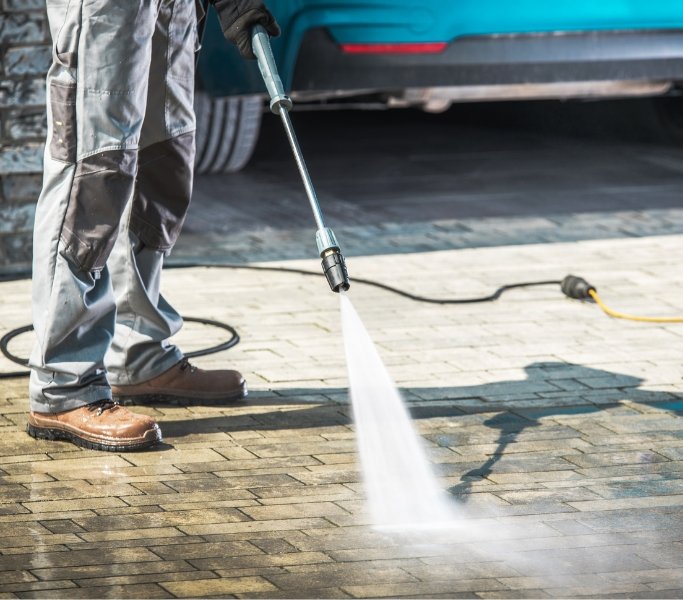
Why the Surface Type Changes Everything
Interlock pavers and poured concrete respond very differently to pressure, moisture, and cleaning agents. Interlock’s individual paver joints and sand-filled gaps behave differently under pressure than a single continuous concrete slab, which changes both the technique and the risks involved.
| Factor | Interlock Pavers | Concrete |
|---|---|---|
| Surface structure | Individual units with sand-filled joints | Single continuous poured slab |
| Staining behavior | Traps oil and dirt in joint lines | Stains spread across the surface |
| Pressure sensitivity | Can dislodge joint sand if too high | Generally more pressure-tolerant |
| Common issue | Weed growth and sand erosion in joints | Surface cracking and mineral staining |
| Resealing needed | Often, to lock in joint sand | Occasionally, for stain resistance |
How We Adjust Our Approach
For interlock driveways
We use controlled pressure to avoid disturbing joint sand, often followed by re-sanding and sealing to keep pavers stable and stain-resistant going forward.
For concrete driveways
Concrete can generally tolerate higher pressure, but we still adjust for surface age and any existing cracks, using degreasing agents on oil stains before applying pressure to lift them fully.
Signs Your Driveway Type Needs Attention
- Interlock: weeds or grass emerging between pavers, visibly eroded joint sand, or loose-feeling pavers
- Concrete: dark staining that doesn’t lift with sweeping, or a chalky, dulled surface texture
- Both: oil stains, tire marks, or a general buildup of dust and grime
Get the Right Clean for Your Driveway
Tell us whether you have interlock or concrete and we’ll recommend the right approach.
Request a Driveway QuoteFrequently Asked Questions
Will pressure washing loosen my interlock pavers?
Not when done correctly. We use controlled pressure and often recommend re-sanding afterward to keep pavers firmly locked in place.
Does concrete need sealing after cleaning?
It’s not always required, but sealing after a deep clean can help concrete resist future staining and make maintenance easier going forward.
Which surface is easier to maintain long-term?
Concrete generally requires less frequent specialized attention, while interlock offers easier spot-repair (replacing individual pavers) but needs more regular joint maintenance.